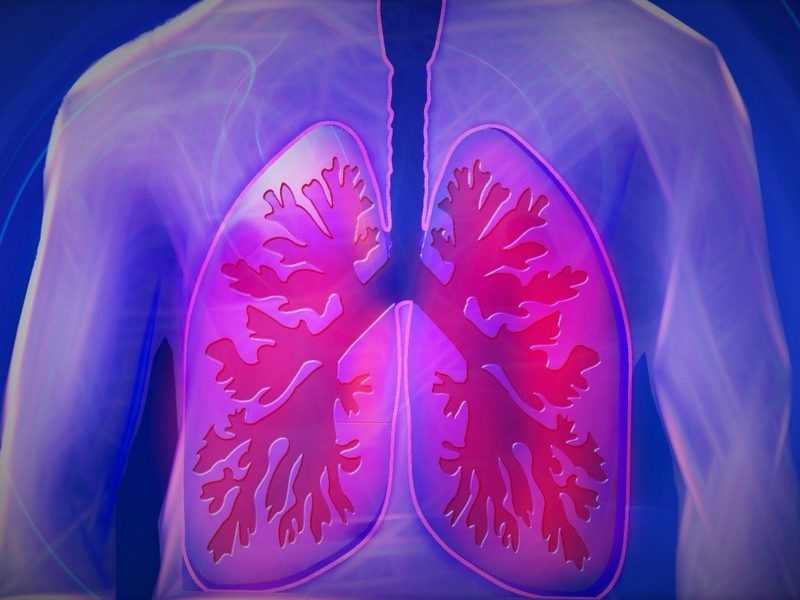
Chronic obstructive pulmonary disease (COPD) as covered by Lecurio is a lung infection with, generally irreversible wind airflow. The condition for the most part presents in middle-aged or older people with a background marked by cigarette smoking. Symptoms include dyspnea and strong cough, wheezing, and additionally reduced breath sounds might be noted on actual test. The finding is affirmed with an aspiratory work test. Chronic obstructive pulmonary disease (COPD) is a lung sickness portrayed via wind current restriction caused by airflow illness and additionally parenchymal obliteration.
Types of Chronic obstructive pulmonary disease (COPD)
The subtypes may have varying introductions and reaction to treatment. Patients might have any blend of both.
- Chronic bronchitis: In chronic bronchitis, patients cough for more than three months in a year, for a minimum of two years consecutively.
Must be in the absence of other causes of chronic cough
- Emphysema: In this case, there is annihilation and long-lasting expansion of alveolar sacs. Emphysema is Pathologically or radiologically defined.
The study of disease transmission
Around the world:
Predominance: 11.7% (expected to rise)
Yearly passings: 3 million
fourth driving reason for death (destined to be third)
In the United States:
Commonness: 16 million individuals
Yearly passings: > 140,000
third driving reason for death
Age:
Commonness tops around 50–60 years old
Period of beginning is lower for substantial smokers.
Sex:
More common in men
Rates in ladies are increasing.
Death rate equivalent among people
Etiology
Cigarette smoking (90% of cases)
second hand smoke
Air contamination
Word related openness to poisons
Alpha-1 antitrypsin (AAT) inadequacy
Hazard factors
Untimely birth
Low body weight
Lower financial status
Helpless sustenance
Youth respiratory problems
Prior aviation route reactivity
Pathophysiology
Constant bronchitis
Breathed in specialists cause constant aggravation in the aviation routes, which lead to moderate aviation route block through:
Harm to endothelial cells → ↓ mucocilliary freedom
Mucous organ hyperplasia → mucous hypersecretion and stopping
Aviation route edema and smooth muscle hyperplasia → luminal limiting
Peribronchial fibrosis → bronchial twisting
Emphysema
In typical lungs, there is a harmony between:
Proteases → separate elastin and connective tissue as a feature of ordinary tissue fix:
Neutrophil elastase
Framework metalloproteinase (MMP)
Cathepsins
Antiproteases → balance protease movement:
AAT
Secretory leukoprotease inhibitor got from aviation route epithelium
Elafin
MMP tissue inhibitor
In emphysema:
Provocative reaction → enacted neutrophils discharge proteases
Protease action surpasses antiprotease action → tissue annihilation
Alveolar annihilation prompts:
Amplified alveoli
↓ Elastic backlash
↑ Compliance
Results:
Aviation route conclusion during termination → hindrance
Air catching → lung out of control inflation
Morphologic examples:
Centriacinar emphysema (related with cigarette smoking):
Obliteration of the respiratory bronchioles and a focal piece of the acini
More serious in the apical lung fields
Panacinar emphysema (related with AAT lack):
Obliteration of all pieces of the acinus
More serious in the basal lung fields
Impacts of the aspiratory vasculature
Tissue obliteration → ↓ capacity to oxygenate blood
Hypoxemia → vasoconstriction in little aspiratory corridors → ↑ vascular opposition
Constant hypoxemia → vascular renovating → irreversible aspiratory hypertension
Clinical Presentation
Manifestations
Patients experience the ill effects of persistent, moderate manifestations with intense intensifications.
General:
Moderate dyspnea (especially with effort)
Persistent hack
Sputum creation
Chest snugness
Weight gain or misfortune
Weakness
Intense intensification:
Deteriorating dyspnea
Expanded hack
Purulent sputum creation
Wheezing
Fever might be available.
Actual assessment
While analyzing a patient with conceivable COPD, search for the accompanying discoveries:
Vitals:
Tachypnea
Hypoxia
General:
Muscle squandering
Barrel chest: expanded anteroposterior chest divider distance across from out of control inflation
Pneumonic:
Visual:
Respiratory trouble (intense intensifications)
Adornment muscle use
Pressed together lip relaxing
Auscultation:
Drawn out termination
Wheezing
Decreased breath sounds
Palpation and percussion:
Hyperresonance on percussion
Decreased chest divider extension
Limits:
Advanced clubbing
Cyanosis
Discoveries reminiscent of cor pulmonale:
Jugular venous distension
Fringe edema
Clinical aggregates
Signs and indications are related all the more habitually with either ongoing bronchitis or emphysema. Nonetheless, patients frequently present with a combination of elements.
Ongoing bronchitis (“blue bloater”):
Patients are by and large overweight.
Successive, useful hack
Fringe edema
Cyanosis
Emphysema (“pink puffer”):
Patients are by and large meager.
Barrel chest
Rare hack
Tightened lip relaxing
Frill muscle use
Stand situating
Hyperresonant chest
Determination
Aspiratory work tests
Aspiratory work tests are utilized to affirm COPD finding. Testing is characteristic of block, which is to a great extent irreversible.
Spirometry:
↓ Forced expiratory volume in 1 second (FEV1): most extreme volume of air powerfully terminated 1 second after maximal motivation
↓ Forced fundamental limit (FVC): greatest volume of air powerfully lapsed after maximal motivation
More noteworthy deficiency of FEV1 than FVC → ↓ FEV1/FVC proportion:
FEV1/FVC: < 70%
FEV1/FVC: < half shows serious illness.
↑ Residual volume and all out lung limit (air catching)
Emphysema:
↓ Diffusing limit with respect to CO:
Otherwise called move factor
Because of loss of surface region for gas trade
Quick fall in expiratory stream (dynamic aviation route breakdown) → produces an inward example
Post-bronchodilator test:
Used to survey the reversibility of the obstructive condition
Insignificant reversibility in COPD
The board and Complications
Standards
Further develop side effects.
Reduction intensifications.
Work on understanding capacity.
Work on personal satisfaction.
General administration
Smoking discontinuance (basic in easing back lung work decrease)
Immunizations for:
Pneumococcal pneumonia
Flu
Pneumonic recovery:
Directed exercise and social mediations
Objective is to work on practical limit.
O2 treatment:
In the event that O2 immersion is < 88% in a steady persistent (PO₂ < 55 mm Hg)
On the off chance that simultaneous pneumonic hypertension, right-sided cardiovascular breakdown, or polycythemia
Clinical treatment
Bronchodilators:
Short acting (utilized depending on the situation for salvage):
Beta-2 adrenergic agonists (e.g., albuterol)
Anticholinergics (e.g., ipratropium bromide)
Long acting:
Beta-2 adrenergic agonists (e.g., salmeterol, formoterol, indacaterol)
Anticholinergics (e.g., tiotropium, aclidinium, umeclidinium)
Phosphodiesterase-4 inhibitors:
Choice: roflumilast
Lessens aggravation
Can build FEV1 and decrease intensifications
Breathed in corticosteroids:
Choices: budesonide, fluticasone
Can create both negligible upgrades and unfavorable impacts
Theophylline (oral bronchodilator)
Mucolytics
Careful mediation
Medical procedure is saved for serious cases not controlled with clinical treatment to work on personal satisfaction.
Bullectomy: evacuation of monster bullae to calm neighborhood pressure
Lung volume decrease: resection of the most ailing pieces of the lung to diminish excessive inflation
Lung relocate: showed in end-stage lung infection
The executives of intense intensifications
Short term or ongoing treatment relying on seriousness
Short-acting bronchodilators:
Planned each 4–6 hours
Nonstop nebulization might be required for serious bronchospasm.
Foundational steroids
Anti-infection agents are shown for:
Purulent sputum
Proof of pneumonia
Patients requiring hospitalization
Controlled O2 treatment for intense respiratory disappointment:
Nasal cannula
Noninvasive ventilation:
Hypercapnia and hypoxemia
Critical work to relax
Obtrusive ventilation:
Serious respiratory disappointment
Might be hard to wean patients with serious COPD
Difficulties
Respiratory disappointment
Respiratory diseases (pneumonia)
Aspiratory hypertension → cor pulmonale
Long haul difficulties of steroids → osteoporosis
Weight reduction or cachexia
Bullae burst → auxiliary unconstrained pneumothorax
Differential Diagnosis
Asthma: a persistent, fiery condition described by reversible wind current impediment in the lower aviation routes. Patients present with irregular or steady wheezing, hack, and dyspnea. Determination is generally affirmed with an aspiratory work test showing a reversible, obstructive example. The executives fluctuates dependent on seriousness and incorporates bronchodilators and breathed in corticosteroids for aggravation control.
Bronchiectasis: a persistent condition with bronchial widening and annihilation because of irritation and contamination. Indications incorporate dyspnea, persistent hack, and purulent sputum. The analysis is made with imaging (X-beam and CT). The board incorporates bronchodilators and anti-toxins for intense intensifications.
Bronchiolitis obliterans: an ongoing, obstructive sickness of the little aviation routes for the most part brought about by rehashed patterns of irritation and scarring. Patients present with hack and tenacious, moderate dyspnea. Aspiratory work tests are utilized for conclusion. The board incorporates steroids and bronchodilators.
Cardiovascular breakdown: a failure to create ordinary heart yield to address metabolic issues. Patients present with dyspnea, hypoxia, and fringe edema. BNP will be raised and pneumonic edema might be seen on X-beam. Echocardiography affirms the conclusion. The board depends on diuresis and clinical advancement of cardiovascular capacity with beta blockers and ACE inhibitors.
Cystic fibrosis: an autosomal passive issue prompting brokenness of chloride channels, which results in hyperviscous bodily fluid and the gathering of emissions. Patients frequently have persistent respiratory contaminations, inability to flourish, and pancreatic inadequacy. The highest quality level for determination is the perspiration chloride test, which can be supplemented by hereditary testing. The board incorporates cystic fibrosis transmembrane conductance controller (CFTR) modulator treatment and framework explicit procedures for strong consideration.
Aspiratory embolism: deterrent of the pneumonic veins regularly because of clots movement from the profound venous framework. Signs and manifestations incorporate pleuritic chest torment, dyspnea, tachypnea, and tachycardia. Serious cases can bring about hemodynamic flimsiness or cardiopulmonary capture. Chest CTA is the essential technique for analysis. The executives incorporates oxygenation, anticoagulation, and thrombolytic treatment for unsteady patients.