


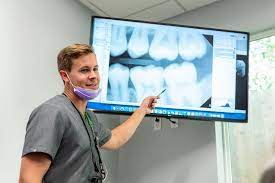
A periodontist is a dentist that specializes in the diagnosis and treatment of gum diseases. In addition to dental school, a periodontist had a few more additional years of training after dental school, gaining expertise in gum treatments and surgeries.
Although most people think of going to the dentist when they have toothaches or other problems with their teeth, a good percentage of dental health issues begin with your gums. Therefore, it is important you see a periodontist if your dentist has noticed any signs of possible gum disease and recommended that you see a periodontist in Singapore.
Many times these start as mild inflammations that gradually worsen over time unless treated by a professional. A general cleaning would be on par with an exam and scaling and root planing (deep cleaning). If the gum pockets are too deep for this, then surgery or other means might be in order at that point.
A periodontal charting will be done to determine the depth of the pockets and whether there is any bone loss. Sometimes this can take place during cleaning; it just depends on how busy you are that day! The deepest pockets would need treatment- which could include medications, antibiotics, scaling and root planing (deep cleanings), laser treatments, radiofrequency treatments, etc.
Routine checkups with x-rays performed every six months would usually suffice for this population, depending on what their dental health history looks like. Post-treatment for implants typically involves little to no intervention by the patient since they are just replacing the tooth into the gum line for you.
If it is deemed that surgery is needed, then your periodontist in Singapore would also be involved. This could be to remove bone and tissue to do implants or simply because there’s too much gum recession around teeth that need crowns or bridges applied.
Surgery can involve flap surgery where they essentially make a cut from inside your mouth outwards, through the gums exposing more of your teeth with stitches or sutures holding everything together as it heals over time, as well as cutting away at any irregular areas of the gum tissue on the roof of your mouth (palate). Surgery can also involve lasers that kill off bacteria but don’t require cutting through anything- very small cuts are made in the gum tissue to insert a laser fiber.
There is also “mini” surgery that works similarly to lasers but involves tiny probes inserted into the gums and minor cuts made around the edges of the probe so that the laser can get in there. Surgery may sound frightening but the good news is that modern techniques have minimized any postoperative pain, bleeding, and swelling considerably.
And if you’ve ever noticed how long it takes you to heal from a paper cut or bruise versus, say, an open wound following surgery, then you’ll understand why this sort of healing is much more efficient than with other types of injuries. If you’ve suffered significant damage to your teeth that requires implants to help with healing, your periodontist in Singapore will place modern implants into the jaw bone with an insertion known as osseointegration, the connection between tooth and bone.
This can be done at a dental office where they give you shots around your mouth before cutting away at the gums to place the implant in your jaw bone. They hardly do any sort of flapping or traditional type surgery anymore for placing implants, so there are no sutures involved whatsoever, which means less chance for infection!
The whole procedure can take as little as 15 minutes, depending on how many teeth need to be replaced. And implants are just as good, if not better, than your natural teeth- they allow you to eat whatever you want, don’t break or bend and look just like your natural teeth.
Implants can be placed in one visit- which means that having one tooth removed for replacement with an implant is far less traumatic than, say, a bridge or denture, which would require several visits over the course of weeks. Plus, there are no adjustments afterward since everything has already been secured in place at the time of surgery.
Of course, this varies by case, but treatment plans involving implants usually take 4-8 months on average before you can start getting them permanently fixed into place after initial placement. After all, it takes time for the jaw bone to heal around these posts, and your dentist will likely need to make sure everything heals properly before moving forward.
Surgery isn’t necessary for everyone- however, if you are missing multiple teeth or it’s too dangerous to do implants on certain parts of your mouth because of bone loss, surgery is deemed necessary to restore functionality back into the affected area. It’s also done to reduce pain associated with pressure from leaning against missing teeth, breaking/stretching gum tissue, etc.
Everything else involving the actual dental work itself can be done by anyone, whether a general dentist or periodontist. You can have all kinds of procedures done by either one depending on what exactly needs to happen, so there’s no real difference there other than expertise level, which brings us to our next point…
If you notice that your gums are shrinking away from your teeth, becoming inflamed or swollen to the point where it hurts, then surgery may be needed. Bone loss is something that can happen with age, but there are ways to stop it- namely, not smoking. Smoking causes blood vessels throughout the body to constrict, affecting everything from bone density/growth to how quickly cuts and sores heal. So if you want healthy gums AND long-lasting implants, do yourself a favor and make sure you quit!
Does a Dentist have to refer you to a Periodontist?
Note that the periodontist specializes in dealing with conditions of the mouth that require surgical intervention, such as gum recession which exposes unerupted teeth under the surface of the gums. This happens when either the tooth is impacted and still growing or when gum tissue attaches itself to your teeth instead of bone. Either way, it’s not the best situation which means you’ll need to work with a periodontist in either case!
So no, a dentist doesn’t have to refer you to a periodontist- but they probably should if you’re hurting. Gum disease can be a precursor for many other health issues, so it’s important that you get things fixed before the problem gets out of hand and progresses into something more serious, which means even more complicated surgery to fix!
Final Words
Did your dentist recommend that you see a periodontist? It would be better if you heed to their advice as soon as possible because it could probably save you your teeth. Call +65 6513 9549 now to book an appointment with an experienced periodontist in Singapore.
An Dental
360 Orchard Rd, #03-06/07 International Building, Singapore 238869
+65 6513 9549